
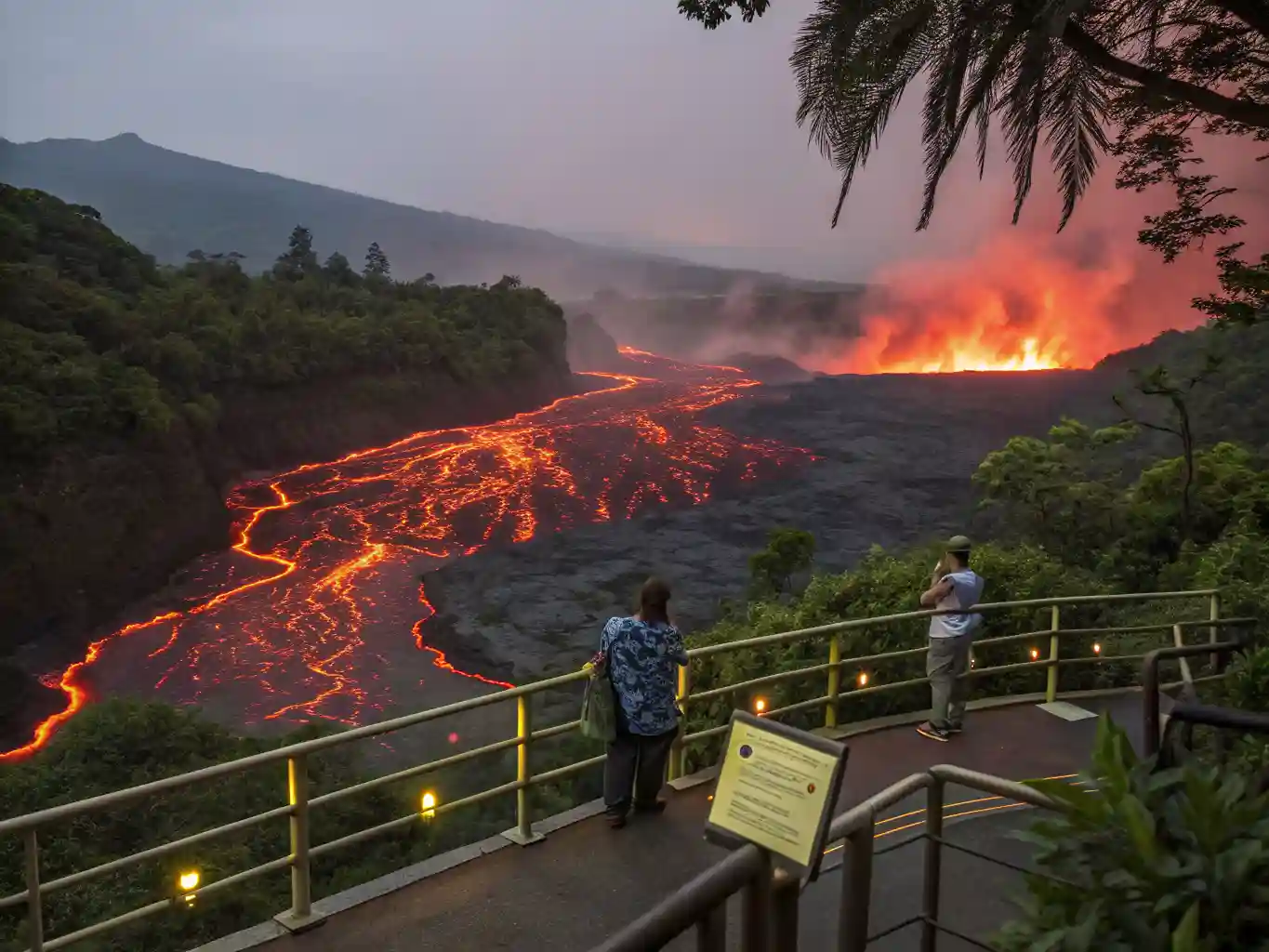
Kilauea is one of those places where the word “landscape” feels too small. The ground is not simply old scenery shaped by weather and time; it is a living volcanic system, still breathing, cracking, steaming, glowing, and rebuilding itself. For travelers coming to the Island of Hawaiʻi in 2026, that makes Kilauea both extraordinary and demanding. It can offer the unforgettable sight of lava fountains rising inside Halemaʻumaʻu, a red glow spreading over the night sky, or fresh black lava cooling under the stars. It can also offer nothing more dramatic than steam, hardened flows, closed roads, and a reminder that volcanoes do not perform on a tourist schedule.
That uncertainty is part of the experience. Kilauea should not be approached as a simple viewpoint on a road trip, where the only question is where to park and take photos. It is an active volcano inside a protected national park, a sacred place in Hawaiian culture, and a natural area where conditions can change quickly. Lava viewing in 2026 is possible, sometimes spectacular, but the safest and most rewarding visit begins with realistic expectations. A traveler who understands the rhythm of the eruption, checks current conditions, respects closures, and prepares for weather, darkness, volcanic gas, crowds, and uneven terrain will get far more from the visit than someone chasing lava at any cost.
Why Kilauea still feels alive in 2026
Kilauea has long been known as one of the most active volcanoes on Earth, but activity does not always mean rivers of lava moving across open ground. In recent years, much of the visible activity has been concentrated around the summit area, especially within Halemaʻumaʻu crater inside Hawaiʻi Volcanoes National Park. In 2026, visitors are often dealing with an episodic pattern: periods of dramatic activity followed by pauses. During an active episode, lava fountains may rise from vents inside the crater, the sky can glow red after dark, and safe viewing areas may become crowded within a short time. During a pause, the same places may look quiet, with only steam, gas, faint glow, or dark new lava visible from a distance.
This difference matters because many travelers arrive with images from social media and expect to see the same scene in person. Lava photos often capture the most intense hours of an eruption, not the quieter days before or after it. A post showing bright fountains may be only a few hours old and still no longer represent what is visible by the time you reach the park. That is why the most useful question is not “Where is the lava?” but “What is Kilauea doing right now, and where can visitors legally and safely observe it?”
The summit eruption style also affects how tourists experience the volcano. When activity remains inside Halemaʻumaʻu, visitors are not usually hiking up to touch or stand beside moving lava. The safer experience is often distant observation from designated overlooks, trails, or pullouts along Crater Rim Drive and nearby areas. At night, distance can actually work in your favor because the glow is often easier to see after sunset than subtle surface details during daylight. Binoculars, a camera with a steady hand or tripod where allowed, and patience can be more useful than trying to get closer.
Kilauea is also not just a visual attraction. It is a place of deep cultural meaning. In Hawaiian tradition, the volcano is associated with Pele, and many residents view the land with respect that goes far beyond scenic tourism. Staying on marked trails, not disturbing rocks or lava, not leaving offerings that harm the environment, and following local guidance are not just safety rules. They are part of visiting with humility. The best travelers treat the volcano as a powerful place they are allowed to witness, not a backdrop they are entitled to control.
Where lava viewing is safest
The safest lava viewing in 2026 is normally inside Hawaiʻi Volcanoes National Park, from official viewing areas that change depending on eruption activity, wind, road access, and crowd management. The park is large, but not every dramatic-looking spot is appropriate for visitors. Crater edges can be unstable, old lava surfaces can hide cracks, steam vents can release dangerous heat and gas, and closed areas are closed for reasons that may not be obvious from a distance.
A common mistake is assuming that a better view always requires getting closer. Around an active crater, closer can mean more exposure to volcanic gases, ash, falling tephra, unstable ground, traffic hazards, and emergency closures. A safe overlook with a clear line of sight is usually a better choice than an unofficial shortcut. Park rangers and posted alerts should be treated as the main authority on the day of your visit because they are responding to conditions as they develop.
For many visitors, the most practical approach is to begin at the visitor center or check official park updates before entering the viewing areas. If lava is visible, staff and signs usually help direct people toward the safest places. If the eruption is paused, the same visit can still be rewarding. The summit caldera, steam vents, sulfur banks, old lava flows, rainforest edges, and cultural sites all show different sides of Kilauea. A quiet day at the volcano is not a failed trip; it is a different lesson in how volcanic landscapes work.
The timing of your visit can strongly affect what you see. Daylight gives you a better sense of scale, crater shape, trail conditions, and the wider volcanic landscape. Night and pre-dawn hours make glow and fountains more visible when the volcano is active, but they also bring colder temperatures, lower visibility, more traffic pressure near popular viewpoints, and a higher chance of tripping on uneven ground. Many travelers do best with a split approach: visit in daylight to understand the area, then return after dark only if current conditions make lava glow likely and access remains open.
The main choices for visitors can be compared in a simple way. None is perfect for every traveler, and the right option depends on activity level, weather, physical ability, budget, and comfort with changing plans.
| Viewing option | Best for | Main advantages | Main limits |
|---|---|---|---|
| Official crater overlooks | Most first-time visitors | Safer access, ranger guidance, strong night glow during active phases | Crowds, parking pressure, distant views |
| Short marked trails near the summit | Travelers who want a fuller park experience | Better sense of landscape, steam vents, crater views, flexible pacing | Uneven surfaces, weather exposure, possible closures |
| Guided volcano tours | Visitors without a car or those wanting interpretation | Local knowledge, easier logistics, safer decision-making in changing conditions | Higher cost, fixed schedule, no guarantee of visible lava |
| Helicopter tours | Travelers seeking aerial perspective | Broad views of crater, flows, coastline, and volcanic terrain | Expensive, weather dependent, less intimate experience |
| USGS and park webcams | Anyone checking before or during a trip | Real-time activity check, useful when eruption is paused or access is limited | Not a substitute for being there, camera views can change |
This comparison helps set expectations. The most reliable “lava viewing plan” is rarely one single spot. It is a flexible route that starts with official updates, allows time for parking and walking, and includes alternatives if the eruption pauses or a viewing area closes. A traveler who builds the day around the entire national park is less likely to feel disappointed than someone who makes the trip depend on one perfect lava photo.
How to plan your visit around changing conditions
Planning a Kilauea visit in 2026 requires a different mindset from planning a beach day or a museum visit. The volcano can shift from quiet to spectacular and back again, while wind direction can change where gas and ash travel. Park roads may remain open in the morning and close later for safety. Parking lots can fill early when lava is visible. A viewing area that worked well for someone yesterday may not be the best choice today.
The best plan begins before you drive to the park. Check the official volcano update, the national park alerts, webcam views, weather, air quality, and road information. This may sound like a lot, but it can be done quickly and can save hours of frustration. If the webcams show no glow and the latest update says the eruption is paused, you can still go, but you should go for the whole volcanic landscape rather than only for lava. If active fountaining is underway, expect more visitors, more traffic, and a greater chance that rangers will adjust access.
Time of day deserves careful thought. Sunrise and early morning are often calmer for general sightseeing, with cooler air and lighter crowds. Midday can be practical for hiking and orientation, but harsh light may make glow impossible to see. Sunset and evening are the classic lava-viewing periods when the volcano is active, yet they require more patience and preparation. In darkness, people walk more slowly, headlights create glare, and visitors sometimes step off safe surfaces without realizing it. A flashlight or headlamp with extra batteries is not optional if you plan to move around after dark.
Travelers staying in Kona should remember that the drive to Hawaiʻi Volcanoes National Park is long, especially after dark. Hilo is closer, and Volcano Village is the most convenient base for those who want to make multiple checks during an active episode. Staying nearby does not guarantee lava, but it gives you more flexibility. You can visit at night, rest, and return early without turning the day into an exhausting island-wide drive.
Weather near the summit can surprise visitors who packed only for a tropical holiday. Hawaiʻi Volcanoes National Park sits at elevation, and evenings can feel chilly, damp, and windy. Rain can arrive quickly. Mist can reduce visibility. Shoes that work on a resort path may feel unsafe on rough volcanic ground. A light jacket, closed-toe shoes, water, and patience will make the experience much more comfortable.
A good Kilauea plan also leaves room for pauses. Many people rush from overlook to overlook, trying to force a sighting. The volcano rewards slower attention. Watch steam move with the wind. Notice the color difference between older lava and newer flows. Listen to rangers when they describe what has changed. Give your eyes time to adjust after sunset. Even when lava is distant, the scale of the caldera and the sense of an active Earth beneath your feet can be powerful.
Health and safety rules every visitor should respect
The main hazards around Kilauea are not always the ones tourists imagine. Lava itself is dangerous, of course, but most visitors following official routes will not be standing next to moving lava. More common concerns include volcanic gas, ash, fine particles, unstable ground, cracks, steam, darkness, traffic, sudden closures, and poor choices made in excitement. Safe lava viewing depends less on bravery and more on discipline.
Volcanic gas is a serious issue. Kilauea can release sulfur dioxide, which can form vog, a volcanic haze that irritates the eyes, throat, and lungs. People with asthma, heart or lung conditions, older adults, pregnant travelers, infants, and young children should be especially careful. Even healthy visitors may feel coughing, headaches, or throat irritation when air quality is poor. If the air smells sharp, visibility looks hazy, or official alerts warn of poor air quality, do not push through for the sake of a view. Move away, get indoors or into filtered air when possible, and choose another time.
Ash and tephra can also affect visitors during stronger episodes. Fine ash can scratch eyes, irritate breathing, make roads slippery, and damage cameras or phones. Larger volcanic fragments are a more serious hazard near active vents, which is one reason summit closures can happen quickly. A closure is not an inconvenience created for tourists; it is a protective decision based on real risk.
Simple behavior makes a major difference around the volcano.
• Stay behind barriers and respect every closure, even when other visitors ignore it.
• Use marked trails and official overlooks rather than social media shortcuts.
• Carry water, warm layers, rain protection, and a light for evening viewing.
• Keep children close, especially near crater edges, roads, steam vents, and dark trails.
• Avoid breathing ash or vog when air quality is poor, and leave the area if symptoms begin.
• Do not take lava rock, disturb cultural sites, build rock stacks, or leave objects behind.
• Drive slowly in the park, watch for pedestrians, and expect sudden congestion near viewpoints.
These rules may seem basic, but they are often the difference between a memorable visit and a dangerous one. Kilauea attracts people at moments of excitement, and excitement can narrow judgment. The safest visitors are those who decide in advance that no photo, shortcut, or closer look is worth crossing a line.
Families should be especially realistic. Children may become tired, cold, or restless while adults wait for glow after dark. A long evening at a crowded overlook can be harder than expected. Bring snacks, layers, and a clear plan for leaving before everyone is exhausted. For travelers with respiratory concerns, it may be better to enjoy the volcano during daylight, keep the visit shorter, and monitor air quality closely rather than wait for night glow in questionable conditions.
What to bring and how to move through the park
A good packing list for Kilauea is not complicated, but it should reflect the conditions of a high-elevation volcanic park rather than a beach resort. Closed-toe shoes are essential. Lava rock is sharp, uneven, and unforgiving, even on short walks. A jacket or fleece is useful after sunset. Rain gear can save the visit during passing showers. A headlamp or flashlight helps you walk safely and keeps your hands free. Water is necessary because volcanic environments can feel dry, windy, and tiring, even when the air is cool.
Food matters more than many visitors expect. Dining options inside or near the park may not match your schedule, especially if you are staying late for glow. Bring snacks or a simple meal, but pack out everything. The park protects fragile ecosystems, and food waste attracts animals that should not be fed. If you are driving from Kona or another distant area, fuel up before the final stretch and avoid assuming that services will be convenient late at night.
Cameras and phones need some preparation as well. Night lava photography can drain batteries quickly, and cold damp air can make handling gear awkward. A small tripod can help where it is permitted and where it does not block paths, but crowded overlooks require courtesy. Do not set up equipment in a way that forces others off the safe route. Bright screens and flashlights can also ruin night vision for people nearby, so use the lowest practical brightness and point lights toward the ground.
Moving through the park should feel deliberate. Start with orientation. Know which road you are on, where you parked, and how long the walk back will take in the dark. Stay aware of changing weather and your own energy. Many visitors underestimate distances because they are focused on the crater. If a ranger announces changing conditions, take it seriously and move before everyone else tries to leave at once.
Respect for the land should guide small choices. Do not wander onto fresh-looking lava just because it appears solid. Do not toss anything into cracks or steam vents. Do not collect rocks as souvenirs. Do not treat Hawaiian names as decorative words without meaning. Kilauea is a scientific wonder, but it is also part of a living Hawaiian cultural landscape. A careful visitor leaves with photos, knowledge, and memory, not pieces of the place.
When a tour makes sense and when it does not
A guided tour can be a smart choice for many travelers, but it is not automatically necessary. If you have a rental car, are comfortable checking official updates, and plan to stay on marked routes inside Hawaiʻi Volcanoes National Park, you can often have a safe and rich visit independently. The park is designed for public access, and rangers, signs, maps, and overlooks make the summit area approachable when conditions allow.
A tour becomes more valuable when logistics are difficult or when you want deeper interpretation. Visitors staying far from the park may appreciate not driving back at night. Travelers who do not know the island well may feel more comfortable with someone who understands road timing, weather shifts, and realistic viewing options. A strong guide can also explain geology, Hawaiian culture, eruption history, plant life, and safety decisions in a way that turns a lava-viewing attempt into a fuller experience.
The key is to choose a responsible operator. A good tour does not promise guaranteed lava, does not encourage guests to enter closed areas, and does not frame risky access as an adventure bonus. It should be clear about uncertainty. It should follow park rules, respect cultural sites, and adjust plans when conditions change. Be cautious with any company or informal guide that suggests secret routes, illegal access, or unusually close approaches to active lava. Around Kilauea, the difference between “local knowledge” and reckless behavior can be very large.
Helicopter tours offer another kind of experience. They can reveal the shape of the volcano, the scale of old lava flows, and the relationship between the summit, rift zones, forests, and coastline. During active periods, they may offer views that are impossible from the ground. Yet they are expensive, weather dependent, and not the quiet, immersive experience some travelers imagine. They are best seen as an aerial overview rather than a replacement for time in the park.
Boat tours are only relevant when lava is entering the ocean, which is not the typical summit-viewing situation many 2026 visitors are dealing with. Ocean entries can be extremely hazardous because new land is unstable, explosions can occur where lava meets seawater, and acidic steam plumes can affect breathing. If ocean lava is not officially active and accessible through legal operators, do not build your plans around it.
The best choice comes from matching the experience to your travel style. Independent visitors get flexibility. Guided visitors get interpretation and easier logistics. Aerial visitors get scale. Webcam viewers get real-time access without exposure to hazards. None of these options is inferior when chosen honestly. The real mistake is chasing an experience the volcano is not offering that day.
Final thoughts: how to leave with the right kind of memory
Seeing lava at Kilauea in 2026 can be unforgettable, but the strongest memory may not be the closest view. It may be the first red pulse over the crater after sunset, the sound of wind over black lava, the sudden awareness that the island is still being made, or the quiet moment when a ranger explains why an area has closed and the volcano feels less like an attraction and more like a force.
The safest way to see Kilauea is to let the volcano set the terms. Check current conditions. Use official viewing areas. Prepare for cold, rain, darkness, gas, and crowds. Keep children close. Protect your lungs. Respect Hawaiian culture and national park rules. Accept that a paused eruption is not a wasted day, and that distance is often part of safe witnessing.
Travelers who arrive with patience usually leave with more than a photograph. They understand why Kilauea is watched so carefully, why local people speak of it with respect, and why safe lava viewing is not about conquering danger but about paying attention. In 2026, the volcano remains active, unpredictable, beautiful, and serious. That combination is exactly what makes the journey worth taking carefully.